
Snow doesn’t usually “break” a car key, but winter conditions can absolutely make key fobs, central locking and keyless start feel unreliable—especially first thing in the morning.
In cold snaps (and the wet, salty mess that comes with snow), there are three main culprits:
1) Cold weather weakens key fob batteries
Most modern car keys use a small coin-cell battery. In low temperatures, batteries can struggle to deliver power as efficiently, so the fob’s signal may be weaker or intermittent (you press it… nothing happens… then it works on the third try). The RAC lists a failing fob battery as the most common reason a key fob stops working.
What you’ll notice:
- Shorter range (you need to be closer to the car)
- Unlock works, but lock doesn’t (or vice versa)
- Keyless start says “key not detected”
2) Your car battery can be the real problem (even when the key looks guilty)
Cold weather makes it harder for car batteries to hold and deliver charge, which is why winter brings so many “won’t start” moments.
With keyless cars, a weak car battery can cause odd symptoms: doors not unlocking properly, warning lights, or the car not recognising the key consistently.
Clue: If the fob unlocks the car but the car won’t start, or you’re seeing dim lights / slow cranking, suspect the car battery first.
3) Ice + moisture can affect locks, buttons and emergency key access
Snow melts. Meltwater gets into door handles, around seals, and sometimes into old-style lock barrels—then freezes overnight. Even if you mostly use remote locking, it’s worth knowing where your emergency metal key is (usually hidden inside the fob) and keeping the lock area usable.
Halfords recommends using a small amount of de-icer (often alcohol-based) to melt ice in/around locks, and warming the key in your hand can help too.
Quick fixes if your key “stops working” on a snowy morning
Try this first (takes 60 seconds)
- Get closer to the car (right next to the driver’s door).
- Press unlock while holding the fob under your chin (yes really — your body can help transmit the signal a bit).
- Warm the fob in your hands for 30–60 seconds, then try again.
- Use your spare key if you have one (great for confirming if it’s the fob battery).
If it’s keyless start: do the “low fob battery” start
Many cars have a backup start method when the fob battery is weak (often holding the fob close to the start button or a marked spot on the steering column). Check your handbook for the exact method.
If the door won’t open (frozen lock/handle/seal)
- Use proper de-icer around the handle/lock area (don’t force the key).
- Warm the key in your hand before inserting if you’re using the manual lock.
How to prevent winter key problems (simple habits that work)
Do these before the next cold snap
- Replace the fob battery proactively (if it’s been a couple of years, it’s cheap insurance). The RAC notes battery issues are the most common key-fob fault.
- Keep your spare key accessible (not locked inside the house where you can’t reach it when you’re already outside… we’ve all done it).
- Keep a small de-icer in your coat pocket or bag (not only in the car—because that’s no help if you can’t get in).
- Avoid leaving keys in the car overnight (temperature swings + condensation are not your friend).
If you live rurally or park outside a lot
- Consider a silicone key cover (helps with moisture and accidental drops).
- Don’t store keys next to phones/wallets that can compress buttons and drain the battery.
When it’s time to get help
If:
- the key works sometimes but not others,
- the blade/emergency key won’t turn,
- the fob has been wet or dropped,
- or you’ve got “key not detected” messages repeatedly,
…it’s usually faster (and cheaper) to sort it before it becomes a full lockout.
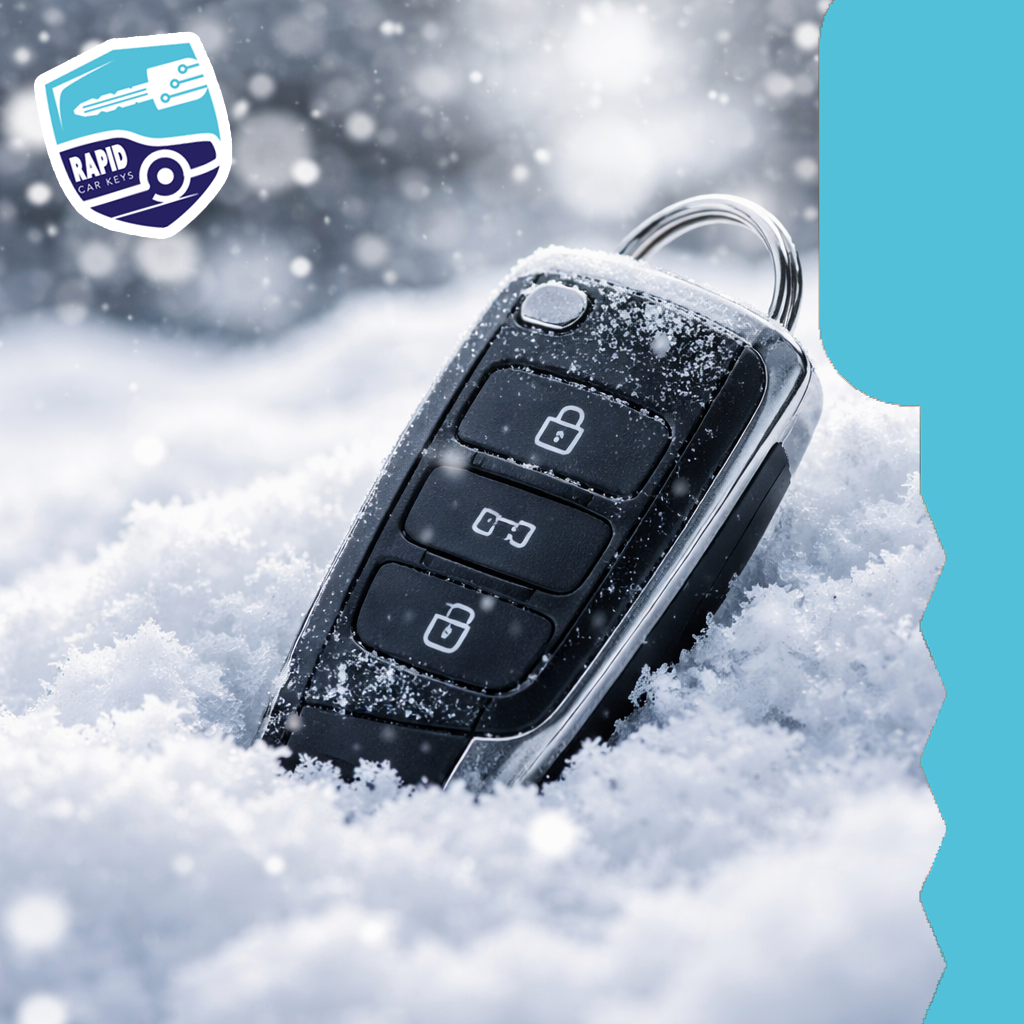
Keys in cold weather — Frequently asked questions
Can snow or melting ice cause problems for a key fob?
Moisture can enter a damaged case, and cold can make a weak battery more noticeable. Keep the key dry and avoid forcing a stiff blade; seek advice if the remote or starting function becomes unreliable.
Should I force a key that is stiff in cold weather?
No. Forcing a stiff or damaged blade risks snapping it. If the key does not turn normally, stop and get advice on the key and lock rather than applying more force.
What key checks are useful before winter driving?
Check that the remote buttons, blade and spare key work, look for a cracked case, and address intermittent faults before a journey. Rapid Car Keys can assess worn or unreliable car and van keys.
Need advice for your vehicle? Call 07482 185310 or contact Rapid Car Keys.
